A good trade-show stand gives the right people a reason to stop. A good trade-show plan also gives the team a reason for being there and a clear way to continue the conversation afterwards.
Before committing to the event, decide what it needs to achieve. Are you introducing an offer, meeting channel partners, demonstrating a product or creating qualified opportunities? That decision should shape the stand, the invitations, the people attending and the follow-up.
Prepare for more than the day on the stand
Work backwards from the next conversation you want to have. Prepare the demonstration, the information visitors will need and a simple way to record an agreed next step. The event is part of the customer journey, not a separate activity that ends when the stand is packed away.
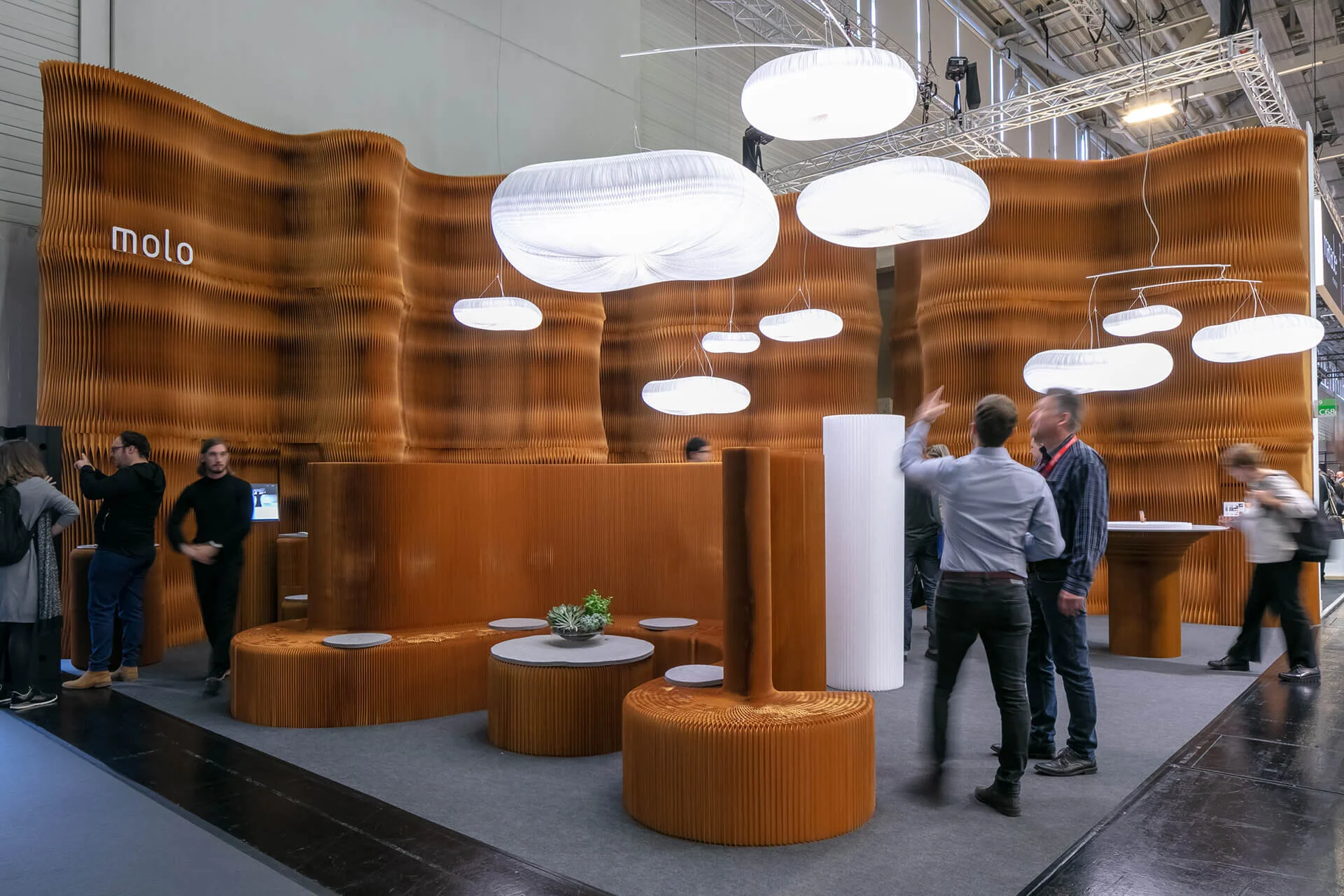
Featured image: Molo by Molo Studio at Orgatec, as credited in the original article. Source: Frame. This is an external design example, not a Mind Methods project.
Engage the senses
Your stand is a physical expression of the brand. A few well-chosen details can make it welcoming and recognisable without exhausting the budget.
- Use suitable textures, clear signage, comfortable seating and thoughtful lighting to support the experience.
- Keep access routes open and provide space for useful conversations and demonstrations.
- Consider refreshments or samples where they suit the story and the event’s requirements.
- Use music only where appropriate, at a level that allows visitors and staff to hear one another.
The objective is not to create the busiest or loudest stand. It is to make the intended audience feel comfortable enough to engage.
Offer a taste of your product
Samples, demonstrations, short consultations or useful giveaways can help visitors understand the offer. Choose something relevant rather than giving away an item with no clear connection to the business.
- Include a clear way to remember the brand and take the next step, such as a useful card, brochure or relevant digital resource.
- Keep giveaways visible and clearly labelled. Do not hide them at the back of the booth or blend them into the display.
- Explain what the visitor is receiving and whether any follow-up is involved.
Organise consultations before the event
Invite suitable customers and prospects to meet you before the doors open. A scheduled conversation can give both parties more value than relying entirely on passing traffic.
Where the organiser offers guest passes, use them thoughtfully for relevant contacts. Confirm the meeting time, stand location and purpose, and allow enough time for each discussion. An invitation is the start of a conversation, not a secured sale.
Use interactivity with a purpose
Demonstrations, questions, hands-on experiences and suitable competitions can make the offer easier to understand. Choose an interaction that teaches visitors something useful or helps them explore a relevant problem.
An engaging experience may encourage people to share it, but social sharing should not be assumed. Make participation straightforward, accessible and appropriate for the audience. Any collection of contact information should have a clear purpose and appropriate permissions.
Encourage relationships rather than a hard sell
Visitors may be researching their options rather than preparing to buy immediately. Ask about their needs and listen before deciding which part of your offer is relevant.
Brief the team to distinguish a useful conversation from a forced sales pitch. Record the visitor’s question, likely requirement and agreed next step where appropriate. A relevant relationship can support a future opportunity, but it should not be presented as a guaranteed purchase.
Retain the connection after the event
Have the follow-up process ready before the event starts. Agree who owns each enquiry, what information should be sent and how the next conversation will be arranged.
Tailor follow-up to what was discussed. A relevant demonstration, answer or proposal can be more useful than a generic discount. Do not automatically add every visitor to an ongoing marketing list without the appropriate permission.
Review the quality of enquiries and subsequent outcomes alongside attendance and contact counts. This makes it easier to judge whether the event was a useful part of the marketing plan.
Prepare a team with complementary skills
Combine product knowledge, relationship-building and sales skills so visitors can speak with the right person. Make it clear when a question should be referred to another team member.
Brief everyone on the message, presentation, arrival times, responsibilities and professional etiquette. Plan appropriate seating, breaks and accessibility needs while keeping the stand welcoming and attended. A clear roster gives visitors access to the right expertise and gives the team the time and space to do the job well.
Related event-marketing projects
- Red Hat exhibition stand and event marketing.
- Polycom Together by Design product launch.
- FIFA Club World Cup Tour exhibition.
- Red Hat at Gartner Symposium ITxpo.
About the author
Article by Simon Tokic. Simon’s interests include basketball, music and surfing, although much of his time is spent applying fundamental marketing principles in strategic and creative ways. Before running Sydney marketing agency Mind Methods, Simon worked on brands including Sony Pictures, Universal Pictures, Glad, Chux, Armor All, Clorox, Barbeques Galore and Anglicare.