Visual cues deserve careful consideration in marketing. So do audio cues. Music can help establish the tone of an advertisement, support a story and give a creative idea a distinctive character.
At Mind Methods, we believe in starting with marketing fundamentals and making the message clear. Choosing a soundtrack should be part of that thinking, not simply the final production decision.
Our team loves music, so this is a subject we enjoy getting into. The six themes below offer useful questions for creative work. The research helps explain particular responses to sound; the marketing judgement is deciding what belongs in your story and testing it with the audience.
1. Staying Alive: music and reward
Research by Salimpoor and colleagues found dopamine release during intensely pleasurable music listening, with different patterns during anticipation and peak emotional experience. The study helps explain the connection between music and reward. It also gives us a reason to think about anticipation and release when shaping a creative experience, while recognising that listeners will not all respond in the same way.
For a creative brief, the useful question is how the soundtrack supports the feeling and progression of the story. A build-up, pause or change in energy should serve the idea rather than compete with it.
2. Totally Addicted to Bass: a sense of power
In The Music of Power, researchers tested music associated with feelings of power and examined related thinking and behaviour. Experiments that changed the bass level while holding other features constant found that stronger bass increased participants’ reported sense of power.
That is a finding from a particular set of experiments, not a rule that more bass makes every advertisement more persuasive. Consider whether the energy suits the brand, audience and viewing environment, then test the complete creative.
3. In Utero: learning about sound starts early
A study by Partanen and colleagues found differences in infants’ neural responses after prenatal exposure to a melody, with effects observed after birth and at four months. This provides evidence of early auditory learning.
The finding concerns early auditory learning, not a formula for adult purchasing behaviour. For creative work, take it as a reminder to ask about the associations a sound may carry. Listen to the intended audience rather than assuming the production team’s response is universal.
4. This Is How We Do It: sound changes the context
Logeswaran and Bhattacharya’s study found that happy or sad musical excerpts influenced how participants interpreted facial expressions. The effect was particularly strong for neutral faces.
For marketers, this suggests a useful test: watch the same creative with different soundtracks and compare the interpretation. Treat that as a practical application to investigate, not proof that a laboratory finding will translate directly into campaign results.
5. Slow and Low: noise is not the same as music
Research by Mehta, Zhu and Cheema found that moderate ambient noise helped performance on certain creative tasks, while higher noise levels impaired it. Importantly, the study examined ambient noise. It was not proof that ambient music universally improves creativity.
A soundtrack that helps one person work may distract someone else. Match the environment to the task, respect colleagues’ preferences and make room for quiet concentration. Our office listening choices are personal favourites, not a productivity prescription.
6. Dr. Feelgood: perceived effort has limits
A later meta-analysis of music in exercise and sport found benefits for mood, physical performance and perceived exertion across the studies reviewed. These findings concern exercise and sport; they should not be generalised into a claim that music removes fatigue in any setting.
Music is not a substitute for sleep or rest. In particular, it should never be relied on to make tired driving safe. NSW road-safety guidance advises drivers showing signs of fatigue to stop in a safe place and rest.
Bring the soundtrack back to the brief
These research themes are starting points for better questions. What should the audience understand? What tone supports that message? Does the music fit the brand, or does it simply reflect the production team’s taste?
Review sound and visuals together, keep spoken information intelligible and compare creative options with the intended audience. The goal is a coherent experience, not a collection of neuroscience claims attached to a favourite song.
A few favourites from the studio
These four albums were part of our office listening when we put this selection together. They are a small sample of the music we enjoyed alongside the work. The best soundtrack for your own day is a matter of taste, the task and the people sharing the space.
Boston: More Than a Feeling
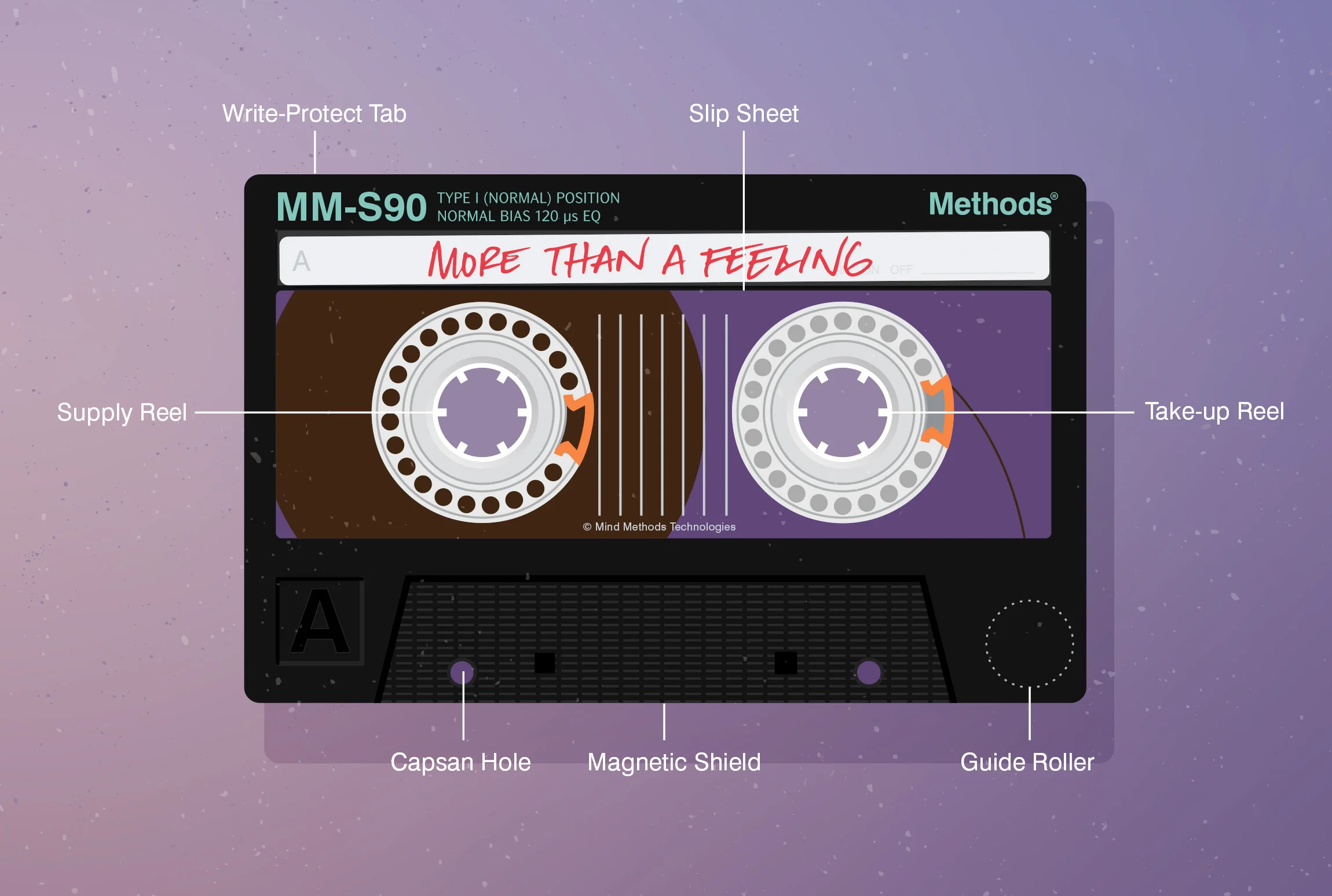
We could hardly keep the article’s title without acknowledging the song that inspired it. This is the video reference included in the original post.
Article by Simon Tokic
Simon enjoys basketball, music and surfing, alongside applying marketing fundamentals in strategic and creative ways. His experience before Mind Methods included work with brands such as Sony Pictures, Universal Pictures, Glad, Chux, Armor All, Clorox, Barbeques Galore and Anglicare.