Make the message worth listening to.

Audio can communicate character and useful information without a screen, but it needs a clear reason to be heard. A weak script, unsuitable voice or unclear distribution plan can undermine an otherwise promising idea.

Mind Methods develops audio around the audience, brand and intended use. We can shape the concept and script, coordinate suitable voice and production specialists, and guide editing and delivery for agreed formats such as branded audio, voiceovers or podcast content.

The brief establishes the story, tone, technical requirements and permissions before recording. We also consider where listeners can find further information and which transcripts or alternatives are appropriate. Production and distribution are related but separate decisions; completing an audio asset does not guarantee an audience.

“Good marketing is clarity plus courage. Clarity about the customer and what truly moves them. Courage to focus on the few activities that will make the biggest difference. Our job is to bring both, so your team knows exactly what to do next, and why.”

Simon Tokic, Co-Founder, Mind Methods
72%

used online music streaming

Listening takes place across different services.

ACMA reported online music streaming use by 72% of Australian adults in 2025.

Planning implication: Select the intended listening context and format rather than equating general audio use with guaranteed branded-content reach.

2025 consumer research; release 5 March 2026
Music-streaming use, not podcast listening or an advertising-effectiveness measure.

64%

listened to FM, AM or DAB radio

Traditional listening remains part of the picture.

ACMA reported 64% of Australian adults listened to FM, AM or DAB radio in 2025.

Planning implication: Match production specifications and message structure to the chosen use; a podcast and a radio spot have different jobs.

2025 consumer research; release 5 March 2026
Reported radio listening, not a campaign audience forecast or proof that radio fits every brief.

40%

of online audio advertising spend was podcast-related

Podcast production needs a distribution decision.

IAB/PwC reported podcasts represented 40% of Australian online audio advertising expenditure in FY2026.

Planning implication: Clarify whether the brief is owned content, an ad or another format, then plan how the finished audio will reach listeners.

Financial year ending June 2026; release 31 August 2026
Australian internet advertising expenditure. Market investment is not audience reach, a recommended allocation or proof of effectiveness.

72%

were concerned about unauthorised AI training

Voice and source permissions need deliberate handling.

Adobe found 72% concerned about content being used to train AI without permission.

Planning implication: Agree rights for voices, recordings and AI-assisted production; do not assume a voice may be cloned or reused without permission.

September 2025 survey; release 29 October 2025
2,165 Australian emerging/semi-professional creators, predominantly Gen Z and Millennials. Not a sample of full-time creative professionals.

Start with the problem, not a package.

01
The idea is a podcast, but its purpose is still unclear.
Define the audience and editorial role first.

Clarify the topic, listener need, format and capacity for continuing production. Start with a realistic concept rather than a recording schedule with no distribution plan.

02
The script reads well but sounds awkward aloud.
Write for listening, not for a page.

Simplify the structure, test the spoken rhythm and make the important point easy to follow. Agree pronunciation and specialist terms before recording.

03
The voice and music do not feel connected to the brand.
Give the sound a clear direction.

Use appropriate references and review points to guide tone, pacing and production choices. Keep licences and usage requirements linked to creative decisions.

04
Different recordings have inconsistent sound and delivery.
Create a practical production standard.

Agree recording conditions, editing requirements and final technical formats with the relevant specialists. Identify what can be corrected and what needs to be recorded again.

Questions worth asking.

The scope can include voiceovers, branded audio, podcast material and other agreed marketing uses. We define the creative and technical requirements before confirming suitable production support. Media buying and ongoing publishing are separate unless explicitly included.

Yes. We can develop the script and coordinate suitable voice options against the brief. Talent availability, usage rights, recording conditions and approval stages are confirmed before commissioning.

Only where appropriate and explicitly agreed, with the necessary rights and consent. We do not assume that a supplied recording permits voice cloning. Any synthetic production should be reviewed for suitability, accuracy and applicable disclosure requirements.

Only when specified. Intended channels, territories, duration and reuse affect licensing. We identify the relevant requirements rather than assume a downloaded asset is unrestricted.

Distribution setup, publishing and promotion can be scoped separately. They involve account ownership, permissions and a realistic audience plan. Producing an episode does not guarantee downloads or authorise publication.

Yes, where agreed. We clarify the required format and review responsibilities, including the accuracy of names and technical language. Accessibility should be considered in the wider implementation rather than treated as complete because a transcript file exists.

Related campaign thinking

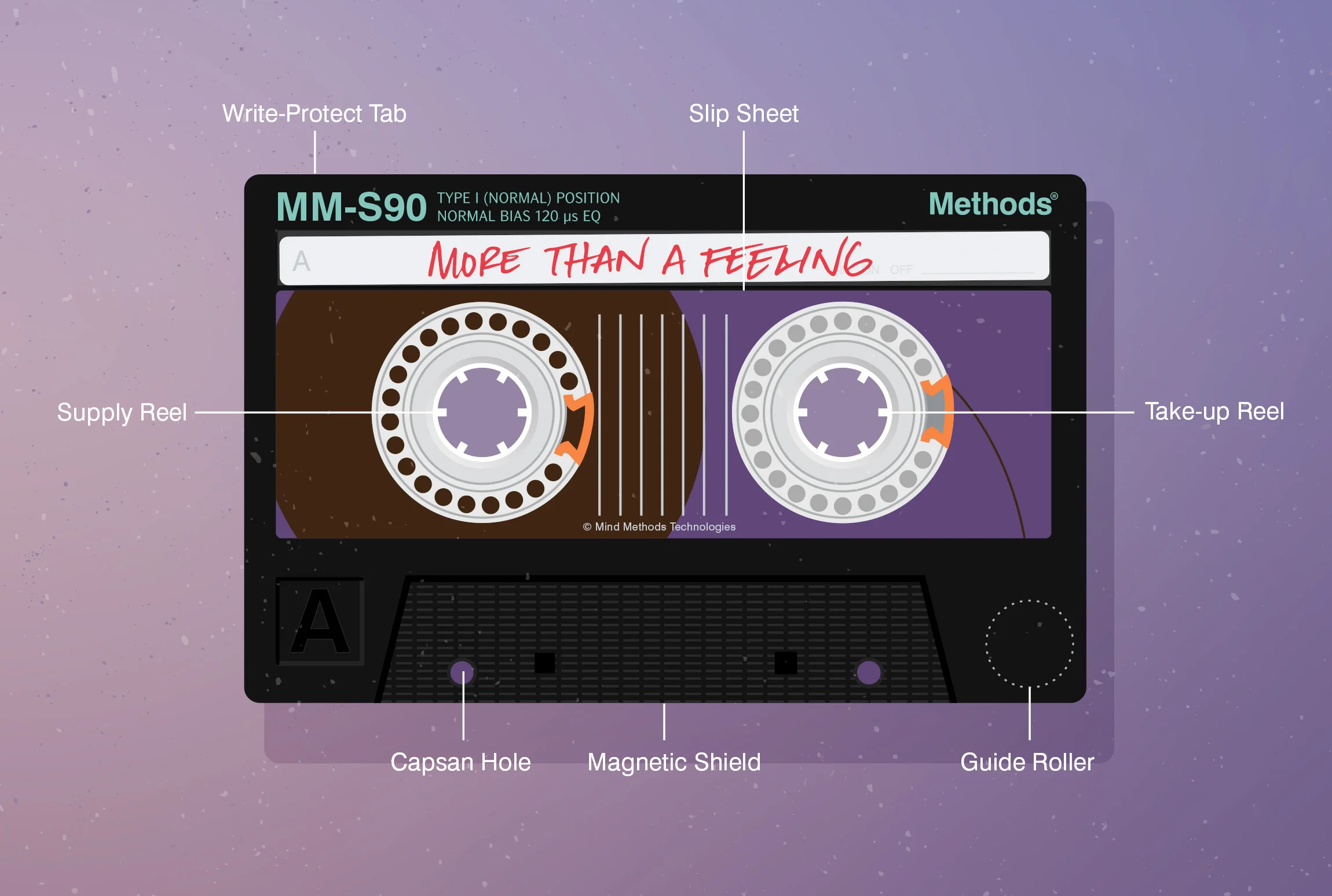
  • Cassette artwork from the original Mind Methods article about music in marketing
    More than a feeling: the power of music in marketing
  • Original Mind Methods marketing templates artwork accompanying the article about preparing a marketing brief
    The power of a marketing brief
  • Rocket launch illustrating getting a marketing campaign off the ground
    Types of marketing campaigns