Start with who your business really is
Finding your voice in business is about knowing who you are and expressing what makes you different from your competitors. Social media gives brands opportunities to communicate directly with their audience, rather than relying only on a large advertising campaign to establish a personality.
People use these channels to share experiences, recommend products and raise concerns about service. At the same time, businesses use a more personal voice to make their communication approachable. The challenge is to sound like a recognisable organisation without pretending to be something you are not.
There is little value in attracting attention if the experience you offer does not match what you promised.
Let the experience back up the personality
Too much self-promotion can make a brand tiring to follow. An overly familiar tone can also feel out of place, especially when it is inconsistent with how the business treats people in real life. A warm social presence loses credibility when enquiries go unanswered or customers cannot get help.
Social communication can reinforce an existing relationship or introduce the business to a new audience. It does not remove the importance of product quality, price, convenience, reputation or a useful recommendation. The voice should support the offer, not disguise its weaknesses.
Make sure someone can answer
A conversational brand needs a practical way to keep the conversation going. Decide who responds to comments and direct messages, how enquiries reach the right person and when an issue needs to be escalated.
In one client project, the branding work coincided with the business adding a dedicated customer service team to handle new leads. The point was not simply to create a friendlier message. The business also needed the people and processes to deliver on it.
Set realistic expectations about response times and support. A clear, helpful answer is usually more useful than a playful reply that leaves the actual question unresolved.
Use a tone that belongs to your brand
Humour, informality and a distinctive turn of phrase can help express a brand personality. They are options, not requirements. What feels natural for an entertainment or consumer brand may be inappropriate when someone is asking for serious advice or help with a problem.
Your underlying voice can remain consistent while the tone changes with the situation. A campaign announcement, a product explanation and a response to a complaint should not all sound identical. Consider the audience and the purpose before trying to reproduce another brand’s style.
Recognise the principle without copying the personality
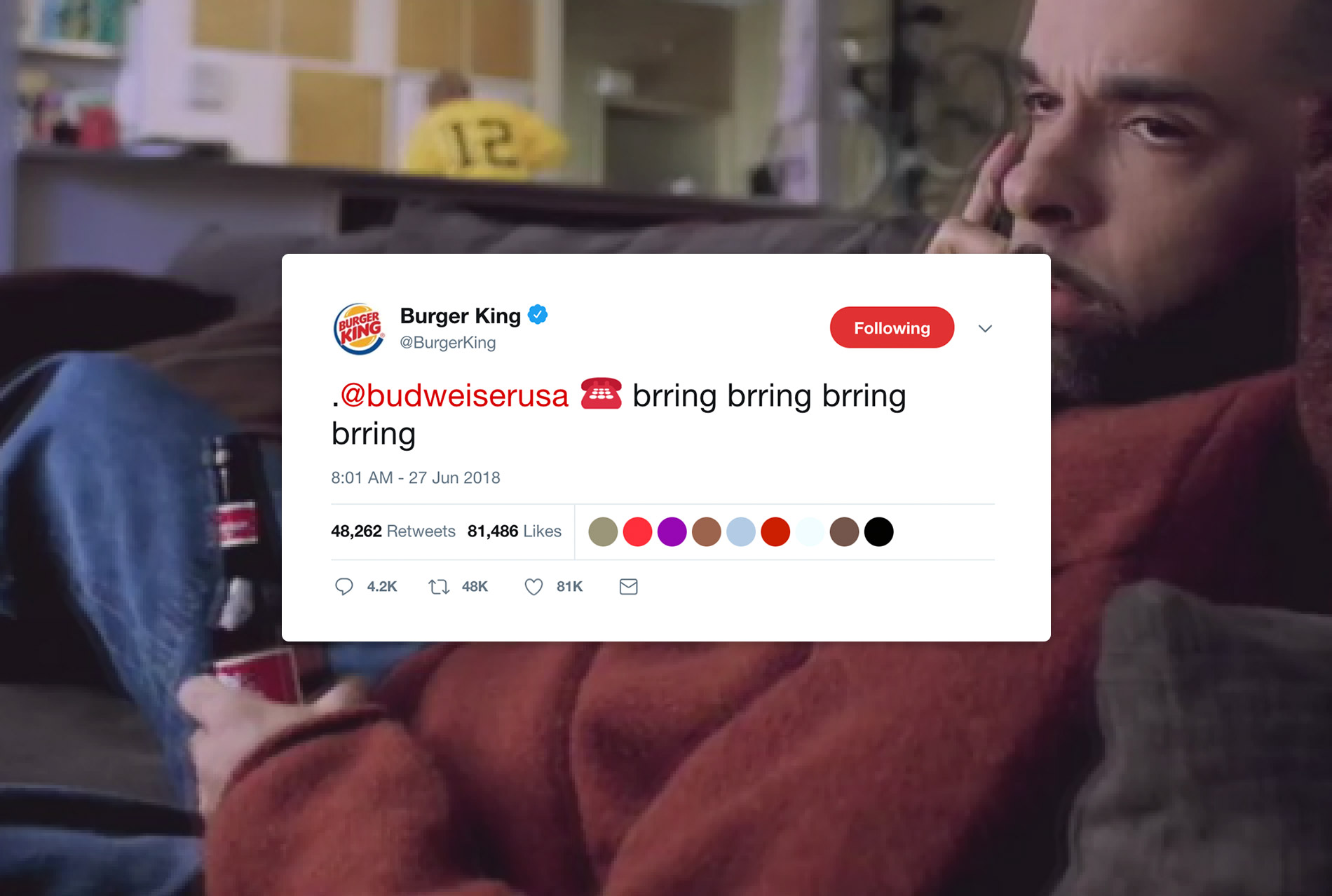
The Burger King and Budweiser collaboration featured here is an example of recognisable brand personalities working together. The useful lesson is consistency: the tone belongs to those brands and makes sense in that context. It is not an invitation for every business to adopt the same humour.
View the collaboration example.
To define your own voice, write down three qualities you want customers to recognise. Then show what those qualities sound like in an announcement, an explanation and a response to a problem. Concrete examples help the team far more than an instruction to be authentic.
Connect the voice to a clear objective
Define what your social media activity needs to achieve and how it supports the wider marketing strategy. Building awareness, helping existing customers and attracting suitable enquiries are different objectives. Each needs an appropriate message and a relevant way to assess progress.
Likes and shares can provide useful feedback, but they do not tell the whole story. Review the quality of conversations, relevant enquiries, referrals and subsequent actions where those can be measured. Keep attribution limits visible rather than assuming that every sale after a post was caused by it.
The aim is not to make every post a sales pitch. It is to understand the role of the communication and make sure that the experience after the click is consistent with the promise.
Humour is a choice, not a requirement
These older commercials offer examples of a distinctive, informal voice. Enjoy the creative idea, then ask what would make your own communication recognisable. A calm, clear explanation can be just as appropriate to a brand as a joke.
Original commercial video reference.
Original Budweiser Wassup video reference. Older third-party videos may become unavailable.
Offer something worth listening to
A strong voice is more than a way to get noticed. It should help people understand the business, recognise its values and decide whether its products or services are relevant to them.
Share useful information, respond thoughtfully and allow the actual work to support the message. Being distinctive matters, but being believable matters just as much.
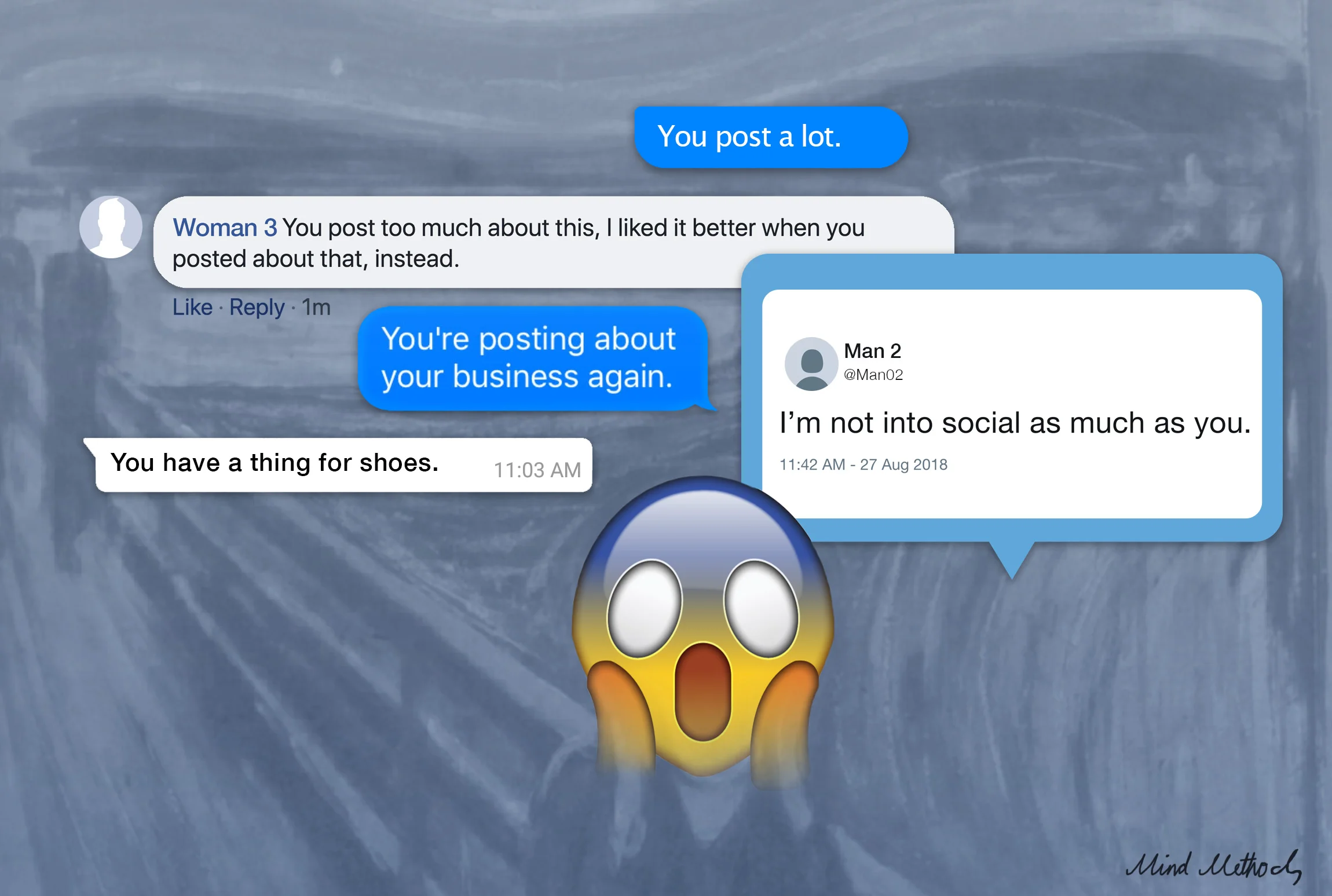
Featured image: campaign artwork retained from the original article.
About the author
Article by Lorenzo Encomienda. Lorenzo’s interests include exploring different cultures and discovering new experiences, from travel and subcultures to comedy and professional wrestling.