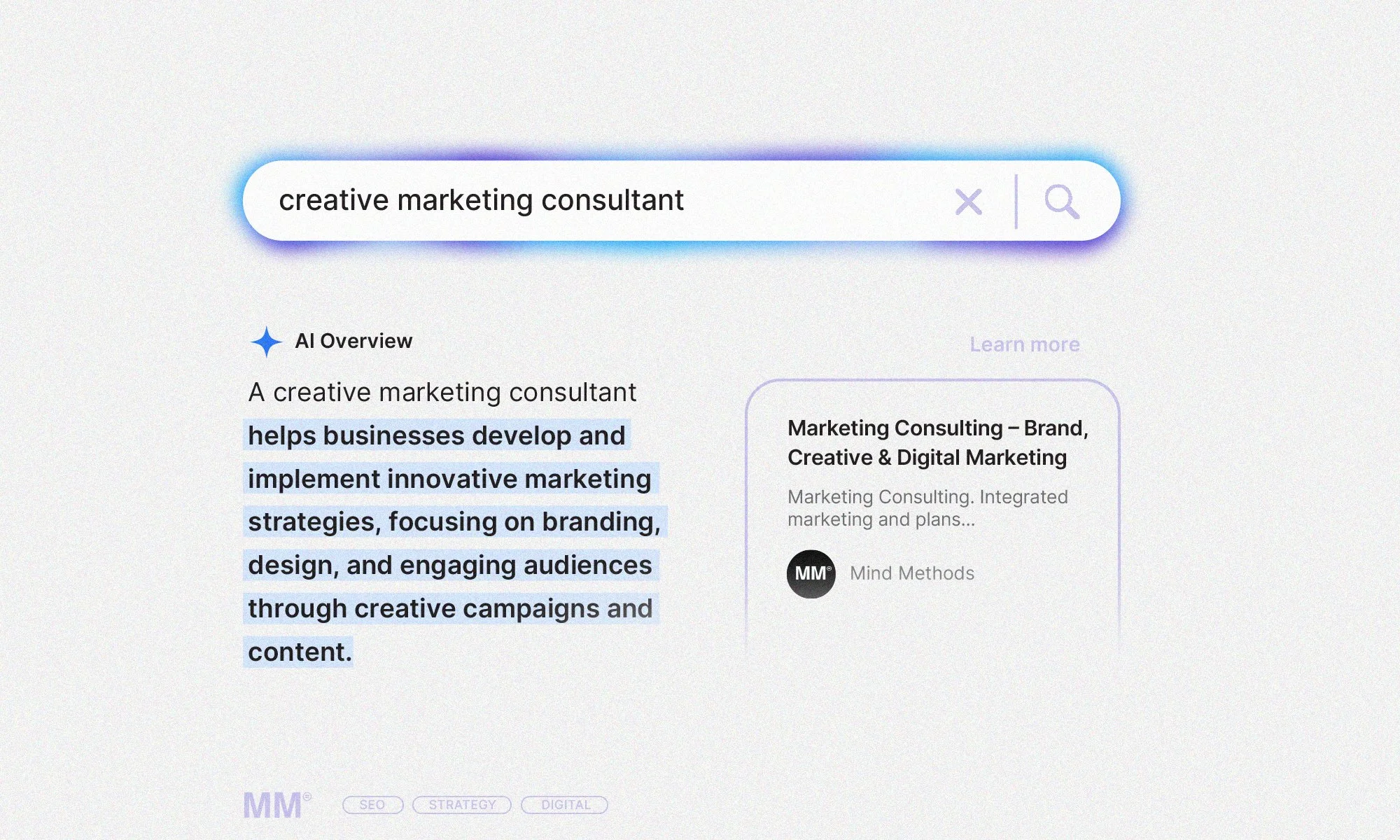
Artificial intelligence (AI) and large language models (LLMs) are changing how people discover information and evaluate brands. At Mind Methods, we have been exploring what that means for digital marketing. One lesson keeps coming through: new technology makes sound marketing fundamentals more important, not less.
The emergence of Generative Engine Optimisation
Like traditional search engine optimisation (SEO), Generative Engine Optimisation (GEO) focuses on visibility. The difference is that it considers how a brand and its information appear in AI-generated answers, rather than only in a list of search results.
The aim is to make accurate, useful information about the business easier to discover and understand. That does not guarantee a mention, a favourable description or a particular position in an AI answer. Results depend on the platform, the question and the sources available.
Why traditional SEO set the stage for GEO
Mind Methods began as a strategic marketing consulting, brand development and creative design agency. As our work developed, we embraced digital marketing and SEO because they connected those disciplines with how customers research and choose businesses.
Our approach has prioritised meaningful content and audience-focused marketing fundamentals over quick-fix tricks. Understanding the customer, explaining the offer clearly and supporting claims with credible information remain useful foundations as search experiences evolve.
GEO should build on that work rather than send the business back to square one. Google states that its established SEO practices remain relevant to AI Overviews and AI Mode; there is no special AI schema or additional optimisation required for those features. That is specific to Google, not a promise about every answer engine.
The practical priority is still to explain your offer clearly, make important information accessible and support it with evidence. A prospective customer should be able to understand the business whether they arrive through a search result, an AI answer or a recommendation.
What AI search analytics can tell us
AI visibility reports can help investigate how a brand appears within the prompts, platforms, locations and periods a provider covers. Useful areas to examine include:
- Share of voice: how often a brand appears relative to competitors within the answers being analysed, rather than a claim about the whole market.
- Answer sentiment: whether the generated wording describes a brand favourably, neutrally or negatively. This is not a direct measure of customer opinion.
- Referral traffic and engagement: visits and actions recorded on your own website where the source can be identified, rather than assumed access to private AI conversations.
- Visibility alongside sentiment: whether a brand is being mentioned and how it is described within the same defined dataset.
- Query intent: whether the prompts being analysed concern research, comparison or purchasing, without assuming they represent every real user.
- Narrative drivers: recurring strengths, weaknesses, sources or themes in generated answers that warrant closer investigation.
These measures are directional, and results can vary between tools and repeated tests. Review the provider’s methodology before presenting a score as fact. For example, Semrush explains its AI visibility data sources and limitations.
GEO reinforces marketing fundamentals
Our view is that businesses should continue to invest in the foundations of a credible brand:
- Understand and clearly describe the audience they serve.
- Communicate an offer that is relevant, distinctive and supported by evidence.
- Deliver a strong experience before, during and after the sale.
AI-generated descriptions can expose inconsistencies in the information available about a business, but they are not an independent audit of service quality. Check the underlying sources and investigate any apparent gaps before treating an AI answer as a reliable assessment.
A clear marketing communications strategy helps connect traditional activity with social media, content, partnerships and SEO. Those channels should reinforce the same business goals and brand strategy rather than tell competing stories.
Strategic implications for businesses
For SMEs and startups with limited budgets, access to sophisticated tools is not enough. The important question is which insights can support a practical decision.
Start with the questions potential customers ask, the information they need and the parts of the buying journey that matter most. Then decide what to improve and how to measure it. A visibility score is useful only when its meaning and limitations are understood.
At Mind Methods, we combine the use of marketing technology with strategic marketing fundamentals. The intention is to help clients direct effort towards relevant audiences and measurable objectives, rather than chase every new tool or promise.
Start with the questions that influence a buying decision
Choose a small set of questions customers genuinely ask when comparing your business with alternatives. Keep the platforms, wording and market consistent when reviewing answers. Note whether the business appears, whether its description is accurate and which sources support the answer.
Then look for something you can actually improve. Perhaps a service page leaves an important question unanswered, an old directory still describes the business incorrectly, or a useful piece of proof is missing from the website. Fix the information before chasing a score.
Recheck those questions over time and review the enquiries and visits you can measure alongside them. A single favourable answer is encouraging, but a repeatable pattern is more useful for planning.
Keep the marketing objective in view
For us, the value of GEO is the opportunity to make a business easier to understand and consider. It belongs in the same conversation as brand positioning, content, SEO and customer experience. We help connect those pieces so the next investment addresses a real gap rather than the latest acronym.
About the author
Article by Simon Tokic. Simon’s interests include basketball, music and surfing, although much of his time is spent applying fundamental marketing principles in strategic and creative ways. Before running Sydney marketing agency Mind Methods, Simon worked on brands including Sony Pictures, Universal Pictures, Glad, Chux, Armor All, Clorox, Barbeques Galore and Anglicare.