Make buying easier. Keep the business behind it connected.

An online store has two customers to serve: the person trying to buy and the team trying to fulfil the order. A smoother checkout is only part of the job if product information, stock, payments or delivery keep creating work behind the scenes.

Mind Methods develops ecommerce websites around that complete journey. We can help with a new WooCommerce store or a focused improvement to an existing setup, connecting product structure, responsive design, checkout and order handling with the business rules that support them.

We start by understanding what you sell, who can buy it, how it is priced and how orders are delivered. Product variations, shipping regions, payment methods and any accounting or inventory connections are then assessed as practical requirements. Special pricing, subscriptions or trade ordering need an explicit scope rather than an assumption that an extension will solve everything.

A successful handover makes daily product and order work understandable. We also agree on testing, launch continuity and ongoing care. Explore our website services for the wider design and development approach.

“Good marketing is clarity plus courage. Clarity about the customer and what truly moves them. Courage to focus on the few activities that will make the biggest difference. Our job is to bring both, so your team knows exactly what to do next, and why.”

Simon Tokic, Co-Founder, Mind Methods
24%

of Australian retail spending is online

Treat the store as a business channel.

Online purchases represented 24% of Australian retail spending in 2025, according to Australia Post.

Planning implication: Connect the storefront with stock, fulfilment and service responsibilities from the start.

2026 eCommerce Report; 2025 data
Australian retail spending based on CommBank iQ data; not a WooCommerce share or a conversion rate.

69%

want delivery options at checkout

Delivery choice is part of the experience.

Australia Post reports that 69% of shoppers want a range of delivery options at checkout.

Planning implication: Make available options, costs and expectations clear and consistent with what the business can fulfil.

2026 eCommerce Report; 2025 data
Australian stated preferences; November 2025 Omnibus Survey, published in the 2026 report. No guaranteed conversion effect.

40%

cite high additional costs

Make the full price easier to understand.

High extra costs, including shipping, tax and fees, lead Baymard's reported checkout-abandonment reasons at 40%.

Planning implication: Show applicable costs as early as practical and test how the rules behave across real orders.

2026 survey summary; fieldwork dates not supplied
US self-reported abandonment reasons excluding the just-browsing category; not 40% of all orders.

18%

cite compulsory account creation

Do not add an unnecessary step to buying.

Baymard lists required account creation at 18% among reasons shoppers report abandoning checkout.

Planning implication: Review when an account is genuinely needed and explain any trade, subscription or membership requirements.

2026 survey summary; fieldwork dates not supplied
US self-reported checkout reasons; not a universal recommendation to remove accounts or a promised sales uplift.

Start with the problem, not a package.

01
Customers struggle to find the right product or variation.
Organise the catalogue around buying decisions.

Review categories, product attributes, search, filters and the information needed to compare options. Build a manageable product structure instead of treating the store as a collection of unrelated product pages.

02
People add products to the cart, then disappear at checkout.
Investigate the friction before buying more traffic.

Check the journey across mobile and desktop, including costs, account requirements, delivery choices and payment failures. Use available evidence to prioritise tests rather than assuming every abandoned cart can be recovered.

03
The store takes orders, but the team repeats the same data entry elsewhere.
Connect the process behind the purchase.

Map which system owns products, stock, customers and orders. Assess supported connections, reconciliation and failure handling so an integration reduces work without creating uncertainty about the correct data.

04
Different customers need different prices, terms or ordering rules.
Prove the selling rules before scaling the build.

Document the required customer groups, access and commercial rules. Test a representative order flow, then confirm extension suitability, licences and support responsibilities before committing to a more complex store.

05
A store migration risks interrupting sales or losing recent orders.
Plan the change around active trading.

Agree on product and customer migration, URL mapping, order cutover and payment testing. Separate test transactions from live activity and protect new orders when moving or recovering data.

Questions before we get started.

It depends on your product range, content needs, operating model and support capacity. We assess WooCommerce alongside relevant alternatives rather than choosing on familiarity alone. The recommendation makes implementation, extensions, hosting and ongoing care visible.

Yes. A focused review can cover product structure, the buying journey, technical issues and order handling. We distinguish urgent fixes from longer-term improvements and agree on what can be changed safely within the existing setup.

We assess the interfaces and extensions available for the named systems, what data must move and which system owns it. The scope includes permissions, error handling and reconciliation. We do not assume every connection is native, real-time or included in the website build.

Your business supplies and approves its commercial rules, supported by appropriate specialist advice where needed. We translate those decisions into the agreed store configuration and test representative cases. Payment-provider acceptance, fees and third-party services remain separate dependencies.

We plan tests in an appropriate staging environment and use supported payment test modes. Email, fulfilment and other integrations need separate controls because a test payment does not automatically isolate them. The test scope and live cutover are reviewed before transactions are enabled.

The handover can include role-appropriate training for the routine product and order tasks in scope. We distinguish those tasks from configuration and integration changes, and agree on support, updates and ongoing care. New features and major catalogue work are scoped separately.

Related campaign thinking

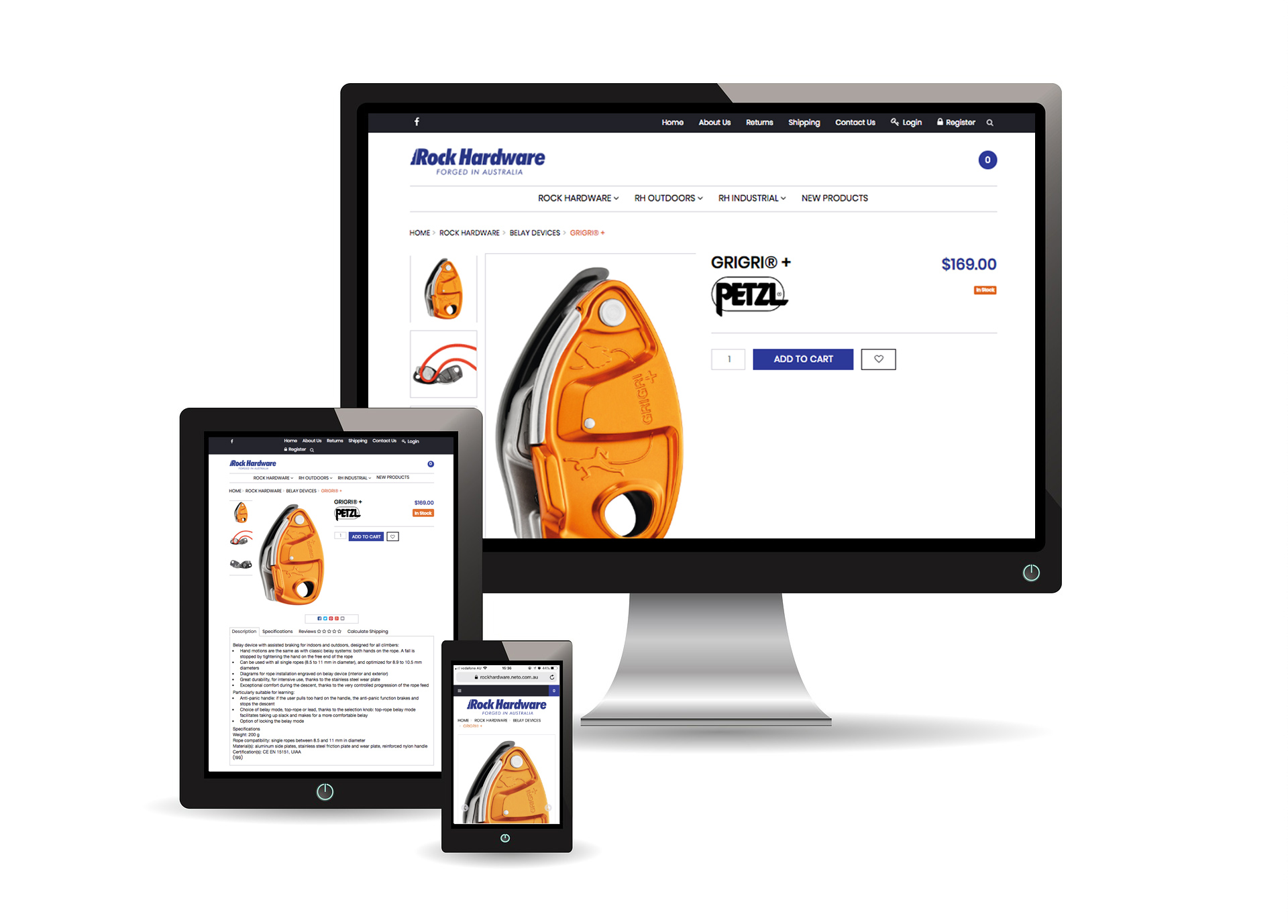
  • Rock Hardware product page displayed on a desktop monitor, tablet and smartphone.
    Rock Hardware store
  • Retail activation and digital marketing for Lander
  • Original Mind Methods image accompanying the article about five factors supporting SEO results
    Five critical factors supporting online marketing and SEO results