Make the space communicate before anyone explains it.

An event or exhibition space has to make sense quickly. In a busy environment, unclear messages, competing graphics and a confusing visitor route can make it harder for people to engage with the brand.

Mind Methods develops branded event and environmental design around the audience, purpose and physical context. We connect the key message, visual identity and relevant touchpoints, from exhibition graphics and wayfinding to supporting presentation and follow-up material.

The creative direction is coordinated with the organiser, venue and suitable production specialists. Dimensions, installation requirements, accessibility and safety responsibilities need clear owners. We focus on a coherent experience and practical design brief; structural engineering, event operations and regulatory approvals remain separately scoped.

“Good marketing is clarity plus courage. Clarity about the customer and what truly moves them. Courage to focus on the few activities that will make the biggest difference. Our job is to bring both, so your team knows exactly what to do next, and why.”

Simon Tokic, Co-Founder, Mind Methods
$17.2bn

spent in Australia by business-event travellers

The experience extends beyond the stand.

Tourism Research Australia reported $17.2 billion of in-Australia trip spending by business-event visitors in 2025.

Planning implication: Consider the wider visitor journey and the useful role of each branded touchpoint, not just a single display.

Calendar year 2025
Visitor-economy spending, not exhibitor ROI or the total economic contribution of events. Local delegates and some organiser costs are outside scope.

21.4%

of Australians had disability

Make the intended route usable for different visitors.

The ABS reported disability prevalence of 21.4% in its 2022 survey.

Planning implication: Discuss access needs with the venue and qualified specialists early; visual design alone does not establish a safe or accessible environment.

2022 survey; release 4 July 2024
Population prevalence, not one uniform impairment or a specification that addresses every access need.

69%

reported inconsistent supplier information

Make the live conversation match the material.

Gartner found 69% of surveyed B2B buyers encountered differences between supplier website information and sellers.

Planning implication: Keep booth messages, presentations and follow-up information aligned with the approved proposition.

August-September 2024 survey; release 25 June 2025
632 B2B buyers. Public market splits not supplied; not labelled Australian-only or a controlled messaging experiment.

4.8

product-discovery sources used

Plan the connection before and after the event.

IAB/Pureprofile reported an average of 4.8 product-discovery sources.

Planning implication: Link the physical experience with relevant digital information and an appropriate next step, without assuming attendance creates marketing consent.

Commerce Report 2025
Report includes 1,000 Australian and 850 New Zealand online shoppers aged 18-70. Retail context, not a universal B2B path.

Start with the problem, not a package.

01
The stand contains too many messages for a passing visitor.
Choose what needs to be understood first.

Clarify the audience, proposition and intended interaction. Establish a hierarchy that works at different viewing distances rather than putting the whole brochure on a wall.

02
Different event assets look unrelated.
Build a coherent set of touchpoints.

Connect spatial graphics, signage, presentations and supporting material through the approved identity. Account for each format without creating a separate visual language.

03
The design is progressing without reliable venue specifications.
Resolve physical constraints before production.

Confirm dimensions, installation rules and supplier responsibilities. Escalate engineering, safety and access questions to qualified owners rather than treating a visual concept as a build approval.

04
Visitors engage on the day but the next step is unclear.
Design the follow-through as part of the experience.

Agree useful resources and a relevant contact path. Keep consent, lead handling and follow-up ownership explicit rather than assuming every visitor should receive a campaign.

Questions worth asking.

The scope can include exhibition graphics, signage, wayfinding, branded environments and coordinated supporting material. We establish the setting and communication purpose before defining the deliverables.

Not automatically. Event logistics, registration, venue operations, staffing and other services require explicit scoping. Our design role is coordinated with the people responsible for those activities.

Yes. We use the approved specifications and coordinate relevant artwork or creative requirements with suitable suppliers. Responsibilities for construction, installation, safety and approvals remain clear.

We can incorporate agreed design requirements and identify checks needed, but specialist assessment and venue or regulatory approval are separate responsibilities. A design presentation is not an engineering, safety or accessibility certificate.

Reusability can be part of the brief. We consider modular messaging and assets alongside physical formats, storage and production constraints. Changes in venue specifications may still require adaptation or new checks.

We can scope supporting creative, presentations and relevant follow-up material so the experience stays coherent. Media, data capture and outbound communication require their own agreed permissions and responsibilities.

Related campaign thinking

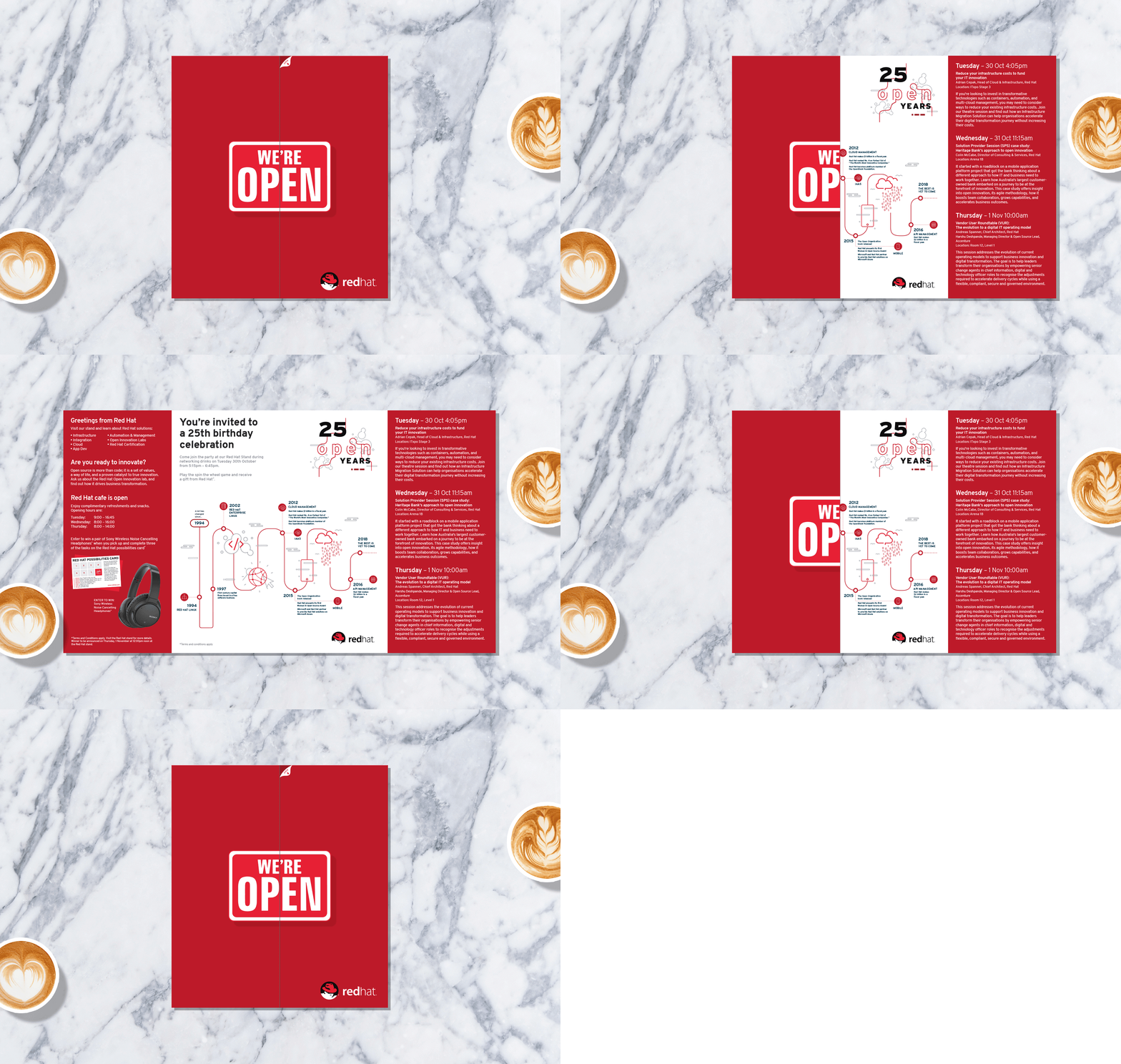
  • Red Hat Open Cafe event collateral on a marble surface beside coffee cups
    Event marketing for Red Hat at Gartner ITxpo
  • Red exhibition wall graphic for the FIFA Club World Cup Morocco trophy tour.
    FIFA Club World Cup tour
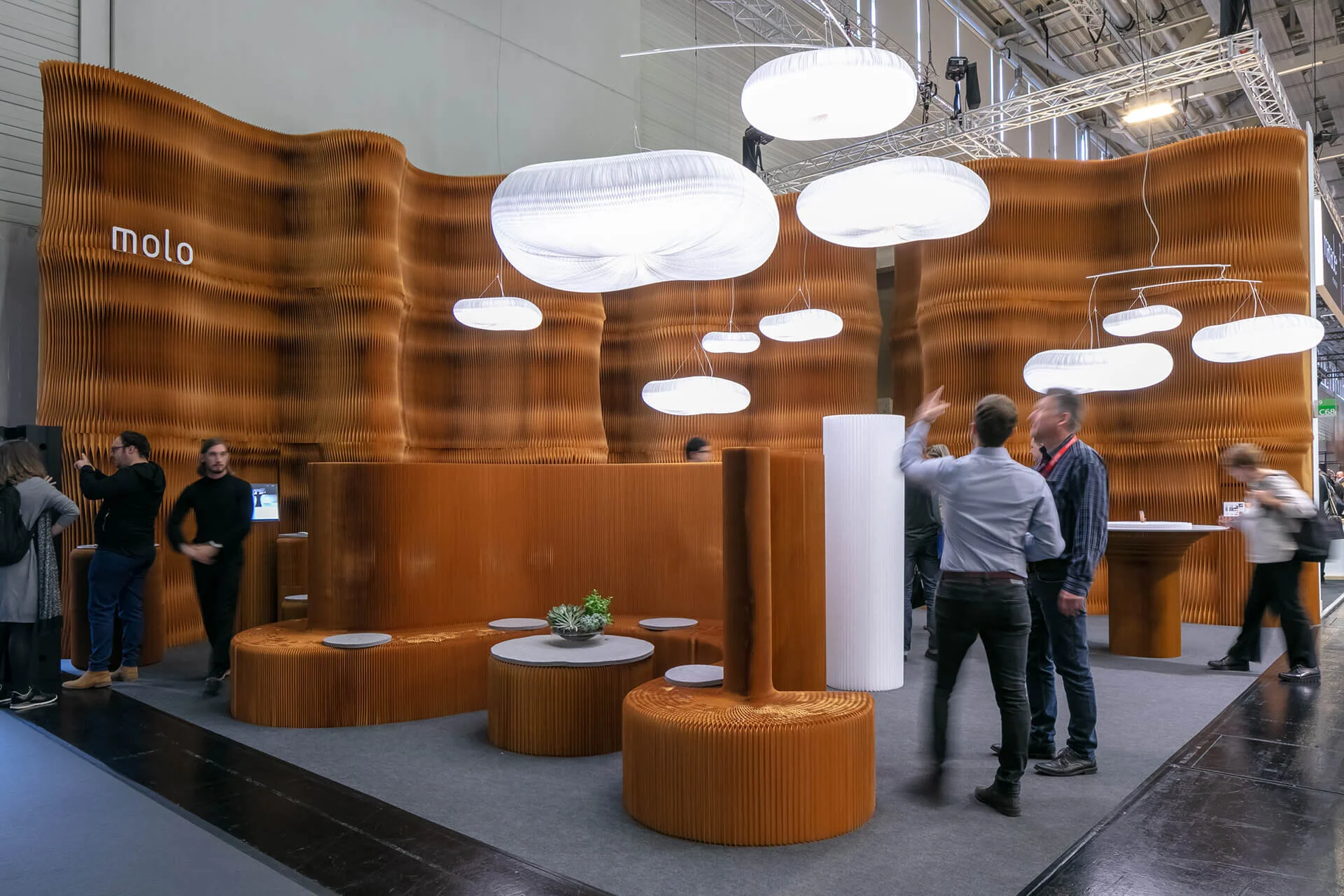
  • Molo Studio exhibition stand at Orgatec, an external design example credited in the original article
    Keys to successful trade show marketing