Replace the assumptions. Make a better-informed move.
A new market, a changing customer or a promising idea can leave a business with more opinions than answers. Before committing time and budget, it helps to know which assumptions are sound and which need testing.
Mind Methods brings market research and insights into the decisions you need to make. We combine relevant published evidence, competitor intelligence and the customer information you already hold. Where the question warrants it, we can scope interviews, surveys or specialist research to fill the gaps that matter.
The aim is a clearer view of demand, buying priorities, alternatives and opportunity, not a report that sits on a shelf. We turn the findings into practical implications for your audience, offer, positioning and next step, keeping evidence, interpretation and uncertainty clearly separated.
Explore the forces shaping your market.
Market Trends
Track meaningful changes in customer behaviour, buying channels and market conditions, then decide what to act on, test or watch.
Industry Insights
Connect sector conditions, customer needs, buying structures and competitive pressures with the marketing decisions your business needs to make.
Competitor Analysis
Understand competing offers, positioning, customer proof and visible activity, then identify credible ways to differentiate rather than copy the market.
“Good marketing is clarity plus courage. Clarity about the customer and what truly moves them. Courage to focus on the few activities that will make the biggest difference. Our job is to bring both, so your team knows exactly what to do next, and why.”
Simon Tokic, Co-Founder, Mind Methods
4.8
product-discovery sources used on average
Your customers may take a different path.
IAB Australia and Pureprofile reported that online shoppers used an average of 4.8 product-discovery touchpoints.
Planning implication: Research where people actually look, compare and seek reassurance before deciding which channels deserve investment.
2025 report; released 16 July 2025
Report covers 1,000 Australian and 850 New Zealand online shoppers aged 18-70. Discovery sources, not advertising frequency or a universal B2B journey.
73%
of B2B buyers avoid irrelevant supplier outreach
Relevance starts before the message.
Gartner found that 73% of surveyed B2B buyers actively avoided suppliers sending irrelevant outreach.
Planning implication: Test the audience problem and buying context before refining the pitch. More contact does not compensate for a weak understanding of the customer.
Fieldwork: August-September 2024; released 25 June 2025
632 B2B buyers; public release does not specify country splits. Reported behaviour, not an Australian-only finding or a measured campaign response rate.
81%
of shoppers shop around for deals
Find out what value means to your audience.
Australia Post reports that 81% of shoppers shop around for deals in its 2026 eCommerce report.
Planning implication: Explore the balance between price, convenience, confidence and service. Do not assume a discount is the only reason someone chooses a supplier.
2026 report, Know your shoppers section
Australian online-shopping context. The accessed summary does not give this item's respondent base or fieldwork dates; not a B2B pricing benchmark.
437,150
business entries in Australia during 2024-25
The market does not stand still.
The ABS recorded 437,150 business entries in 2024-25, alongside 370,500 exits.
Planning implication: Refresh the market map before relying on an old opportunity assessment. The businesses entering a category can matter as much as its established names.
Financial year 2024-25; July 2021-June 2025 release
Australian actively trading market-sector businesses under ABS definitions. Entries are not net growth or a count of competitors in any one category; explicitly historical.
Start with the problem, not a package.
01
We have a growth idea, but not enough evidence.
Test the assumptions before the commitment.
We can frame the opportunity, identify the customers and alternatives, and assess what existing evidence can tell you about demand. Where the decision still rests on a significant unknown, we recommend focused research or a small test. The output is an opportunity assessment with assumptions, limits and a practical next step.
02
Our team disagrees about what customers really want.
Bring the customer into the discussion.
Combine relevant customer feedback, sales conversations and appropriate research to understand needs, barriers and reasons for choosing. We can develop evidence-backed audience profiles where useful, while distinguishing a working hypothesis from a validated finding. Interviewing or surveying customers is scoped and approved before contact.
03
Competitors sound similar and we need a clearer position.
Find the differences that could matter.
Review publicly available offers, messages, proof and customer experiences alongside what buyers value. We can identify category conventions and potential gaps, then turn them into positioning questions to test. A visible gap is not automatically an unmet need, and an estimate is not a competitor’s verified performance.
04
We have research, but no clear decision from it.
Translate the evidence into choices.
Bring the existing reports together around a defined business question. We can check relevance, age, conflicting findings and missing perspectives, then present the implications for your offer, audience or route to market. The result should explain what to act on, what to investigate and what not to conclude.
05
We need an answer without a large research programme.
Choose the smallest useful piece of research.
Start with the consequence of the decision and the information already available. A focused desk review or a small number of carefully scoped conversations may help more than a broad survey. We explain the trade-off between speed, cost and confidence, including when specialist fieldwork or stronger sampling is necessary.
Questions worth asking.
It can help assess a market opportunity, understand customer needs, review alternatives, test positioning or clarify why an offer is not connecting. We begin with the decision, audience and geography so the research has a clear purpose. The work can bring together market analysis, competitive intelligence, customer research and useful audience profiles.
Both can be relevant. Published sources and your existing information are usually the starting point. New interviews, surveys or specialist studies are considered when they could resolve an important gap. Recruitment, sample design, specialist partners, permissions, costs and deliverables are agreed before any fieldwork begins.
This service brings the research together around a wider business question. Market Trends focuses on changes over time and their possible implications; Competitor Analysis examines alternative suppliers and competitive positioning. Industry Insights adds sector-specific context. They can form part of one scoped research engagement without creating duplicate work.
Yes, the approach should fit the market rather than force a consumer survey onto it. Relevant business records, specialist publications, buyer roles and carefully selected conversations may be more useful in a niche. Where the available sample is small, findings are presented as directional rather than claimed to represent the entire market.
We look at who produced it, how the information was collected, when and where it applies, and whether the sample matches the question. Important claims are checked against other suitable evidence where available. Conflicting findings, estimates and missing information remain visible; an AI-generated answer is not treated as a research source.
Agree the research purpose, permitted information, participant approach and access before work begins. Use aggregated or de-identified material where practical, and avoid collecting detail that is not needed. Any participant contact, recording, incentives, privacy requirements and specialist review are confirmed in the scope rather than assumed.
An agreed engagement can include a research brief, evidence review, findings and a decision-focused set of implications and recommendations. We scope the depth, methods, inputs and review points around the question and budget. Research reduces uncertainty; it does not guarantee demand, remove every risk or replace a commercial decision.
Market Research & Insights
Related campaign thinking
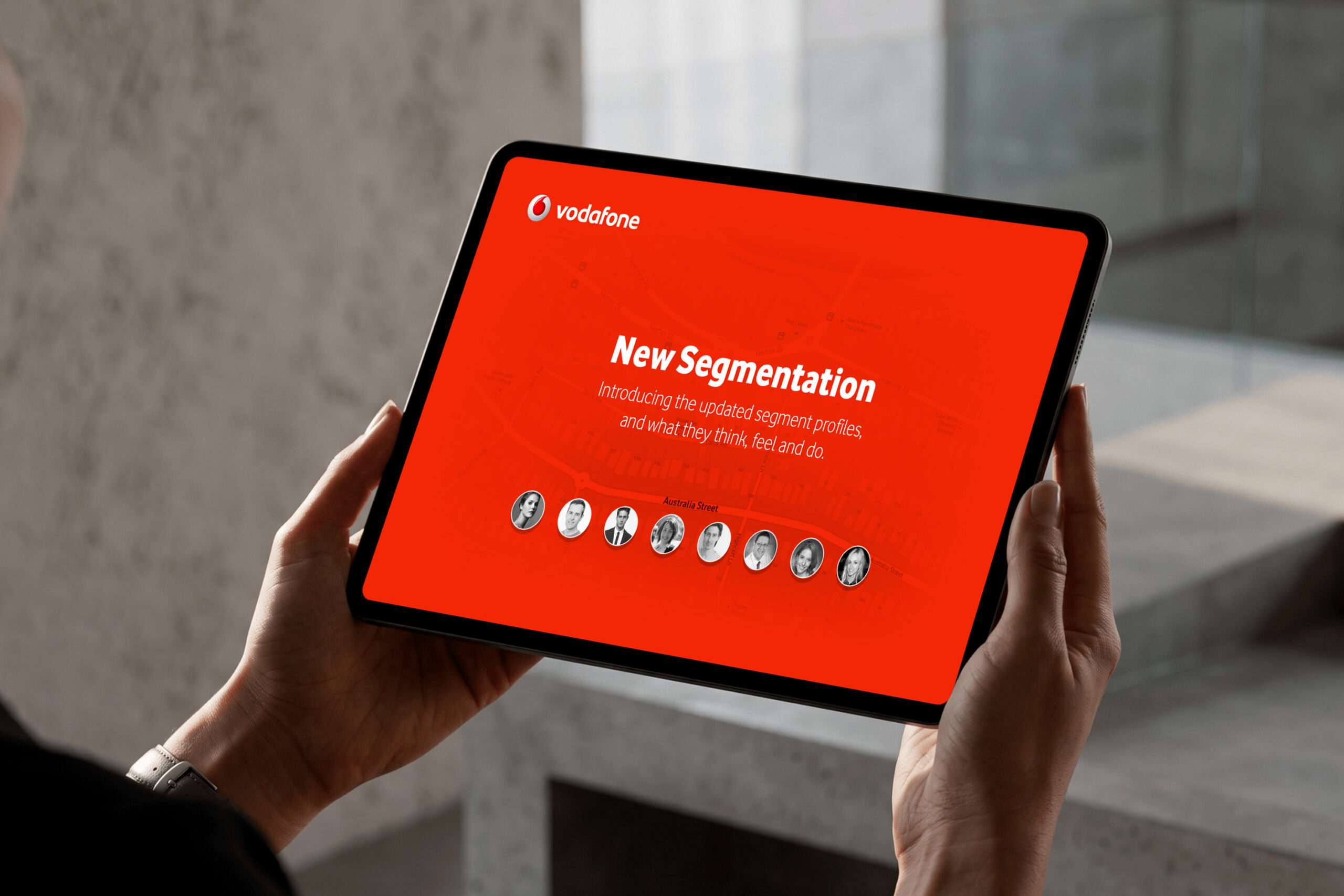
Australia Street digital solution for Vodafone

The power of digital marketing in market research: beyond leads and brand awareness