One clear story. Every team and channel working together.

Your website says one thing. A proposal leads with something else. Campaigns run, but the team is not clear about the message they are meant to reinforce. When communications grow one request at a time, customers can be left to connect the dots themselves.

Mind Methods develops communications strategy that gives your audiences, messages and channels a shared direction. We clarify what people need to understand, believe or do, the evidence that supports the message and the role each channel plays. Integrated marketing then becomes a coordinated approach, not simply a longer list of places to post.

The result is a practical basis for consistent decisions across marketing, sales and internal communications. We help your team choose priorities, adapt the message to different audiences and agree ownership, approvals and measures. Detailed communication plans, messaging frameworks and implementation can then build on that direction without losing the central idea.

Turn shared direction into clear communication.

  • Communication Plan Development

    Turn communication priorities into a practical plan for audiences, messages, channels, timing and ownership, with clear approvals and measures of progress.

  • Messaging Framework Development

    Build a shared structure for campaign and organisational messages, audience priorities, supporting proof and common questions, so every team starts from the same meaning.

  • Internal Communications

    Help employees understand priorities, navigate change and find the information they need through clear messages, practical channel choices and useful feedback.

“Good marketing is clarity plus courage. Clarity about the customer and what truly moves them. Courage to focus on the few activities that will make the biggest difference. Our job is to bring both, so your team knows exactly what to do next, and why.”

Simon Tokic, Co-Founder, Mind Methods
69%

of surveyed B2B buyers encountered inconsistent information

Your website and sales team need the same story.

Gartner found 69% of B2B buyers reported inconsistencies between a supplier website and the information sellers provided.

Planning implication: Align your proposition, evidence and claims across the places customers check.

Survey August-September 2024; released 25 June 2025
632 B2B buyers. Country splits are not specified in the public release. Self-reported behaviour, not a measured sales effect.

4.8

product-discovery sources used by online shoppers

Consistency matters between channels, not just within them.

IAB and Pureprofile found online shoppers used an average of 4.8 product-discovery sources across those assessed in 2025.

Planning implication: Give each channel a clear role while keeping the core message and next step connected.

Commerce Report 2025; released 16 July 2025
Report includes 1,000 Australian and 850 New Zealand online shoppers aged 18-70. Discovery sources, not advertising frequency.

45%

of reported bad experiences involved communication problems

What happens after the message matters too.

Communication problems were selected as a cause in 45% of the bad experiences examined in Qualtrics' 2025 consumer research.

Planning implication: Include expectations, handovers and customer updates in the communications plan, not only promotional messages.

2025 report; released 15 October 2024
Nearly 24,000 consumers across 23 countries. The percentage refers to causes of reported bad experiences, not all interactions.

78%

of AI-using shoppers seek website detail after a quick answer

Make the detailed answer support the first impression.

Among shoppers using AI when shopping, 78% said they used AI summaries for a quick answer and then clicked through to websites for more detail.

Planning implication: Keep the underlying offer, evidence and explanation clear across your own content; do not assume a summary completes the decision.

Commerce & Discovery Report 2026; released 6 July 2026
Australian online shoppers who use AI when shopping, within a 1,079-person sample aged 18-70. Self-reported habit, not an observed click-through rate.

Start with the problem, not a package.

01
Every channel seems to be telling a different story.
Create a common direction without making everything identical.

We examine the current messages, audiences and channel roles, then establish the central proposition and supporting themes. Your team gains a clearer basis for adapting communications to context without changing the underlying promise each time.

02
The message makes sense internally but not to customers.
Start with what the audience needs to understand.

We translate internal terminology and competing priorities into a clearer customer-facing story. Audience questions, objections and credible proof shape the recommendations, helping you explain the value without asking people to decode how your business is organised.

03
Campaign activity is busy, but priorities keep shifting.
Give each communication a purpose and a place.

We connect the business objective to audience priorities, channel choices and a sensible sequence of communication. This creates a reference for briefs and approvals, so new requests can be assessed against the plan rather than automatically becoming another urgent campaign.

04
Different teams and suppliers are pulling in different directions.
Agree who owns the message and who needs to approve it.

We clarify decision responsibilities, source material and approval points across your team and partners. The strategy can guide common briefs and messaging rules while leaving room for specialist judgement in creative, media and delivery.

05
The business is changing, but people are hearing it in fragments.
Connect the external story with the internal explanation.

We identify who needs to know what, in which order and with what opportunity to ask questions. Internal and customer-facing communications are considered together, while sensitive employee, legal or crisis matters remain subject to the appropriate specialist review.

Questions worth asking.

It connects the business objective with priority audiences, the messages they need, supporting evidence, channel roles and a basis for measurement. We also consider ownership and approval requirements. The scope is shaped around the decisions your organisation needs to make, rather than a fixed list of channels.

The strategy establishes the direction and the reasons behind it. A communication plan sets out what will be communicated, to whom, through which channels, when and by whom. We can develop either or connect them in one engagement, with the required detail agreed upfront.

No. A sales conversation, website page and social post serve different purposes. Integration means they reinforce the same proposition and work together in the customer journey. The expression, length, evidence and next step should suit the audience and channel rather than being copied unchanged.

A strategy can define the core messages, themes and proof required. A detailed messaging framework, copywriting and campaign production can be included as agreed deliverables or scoped separately. We make that distinction clear so you know whether you are receiving direction, finished assets or both.

Yes. We can provide an independent strategic view and help your internal team and specialist suppliers work from a common brief. Existing brand work and useful campaign learning are retained where appropriate. Roles, decision rights and feedback processes are agreed so the engagement supports the team rather than creating a second approval bottleneck.

Yes, where employees and internal stakeholders need to understand and support the same direction. We can connect internal and external communication needs, with detailed internal planning scoped where useful. Employment, legal, investor-disclosure or crisis advice is not assumed to be included and may require your qualified advisers.

We agree priorities, deliverables, responsibilities and an achievable sequence based on the people, budget and time available. Implementation can be handled by your team, existing suppliers or separately scoped Mind Methods services. Review measures should test audience understanding and relevant actions as well as reach, so reporting informs the next decision.

Related campaign thinking

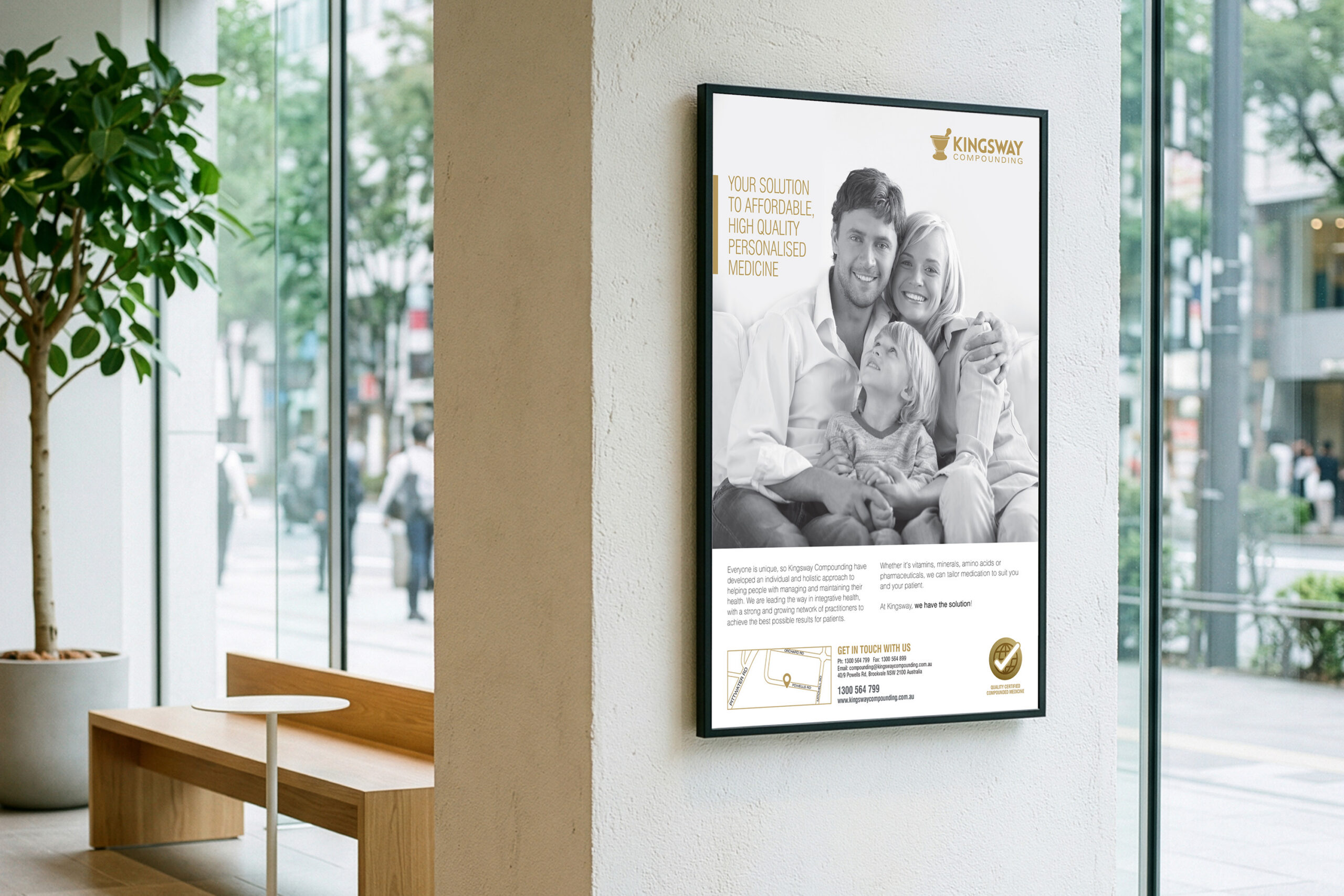
  • Kingsway Compounding poster featuring a family, displayed on an interior wall
    Integrated healthcare marketing for Kingsway Compounding
  • Oriem integrated brand and digital marketing
  • Original Mind Methods image accompanying the four-stage marketing communications strategy article
    Four fundamental stages to a strong marketing communications strategy